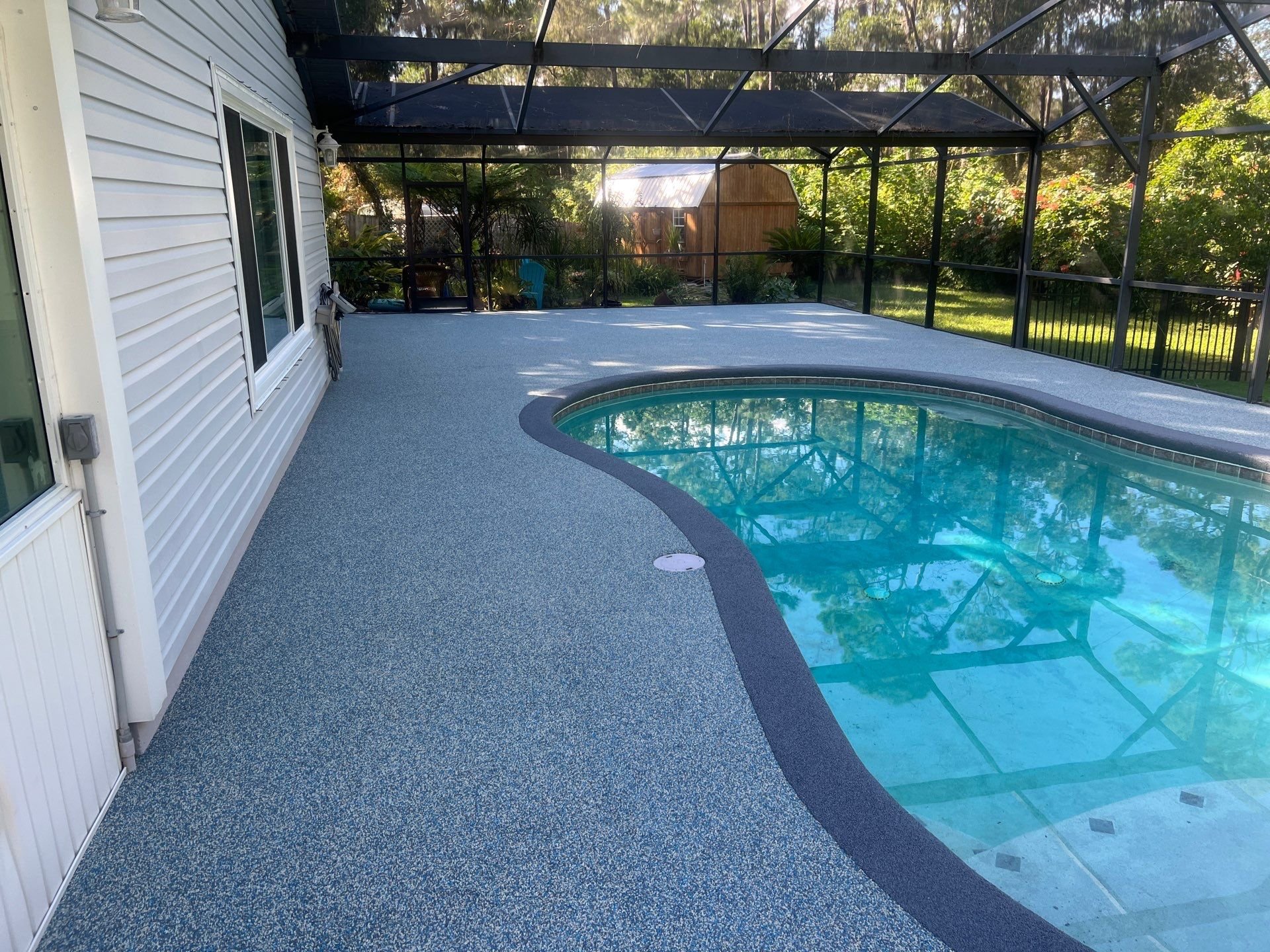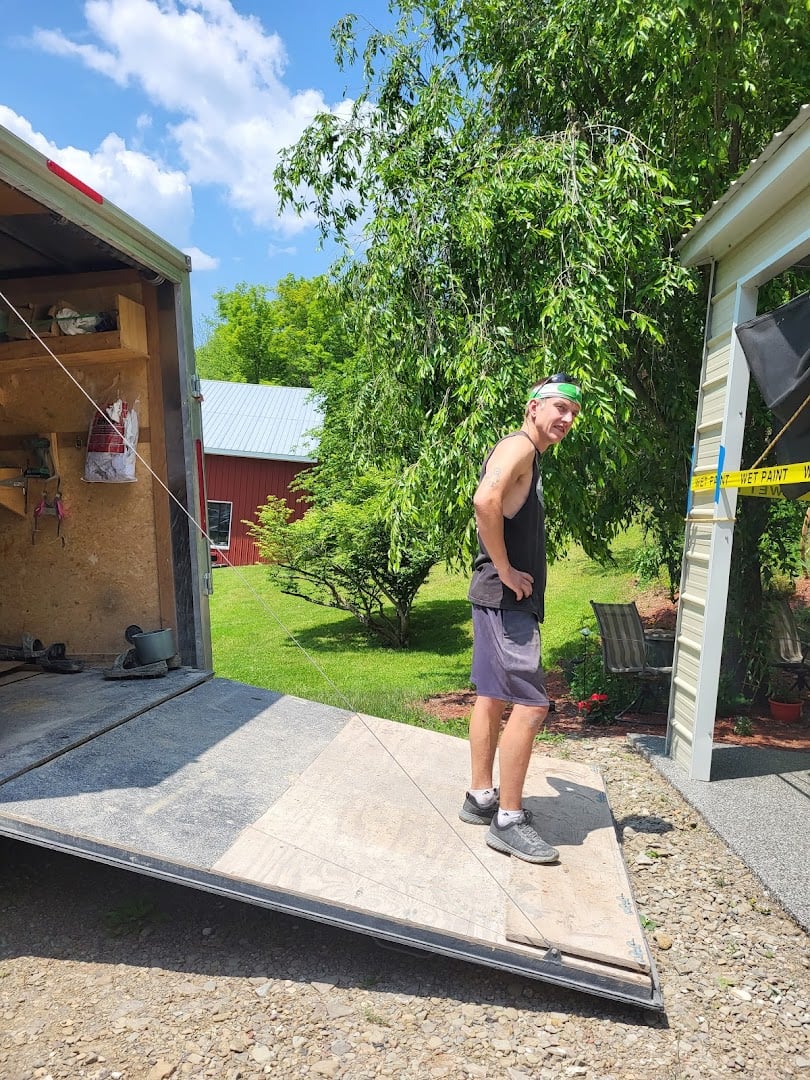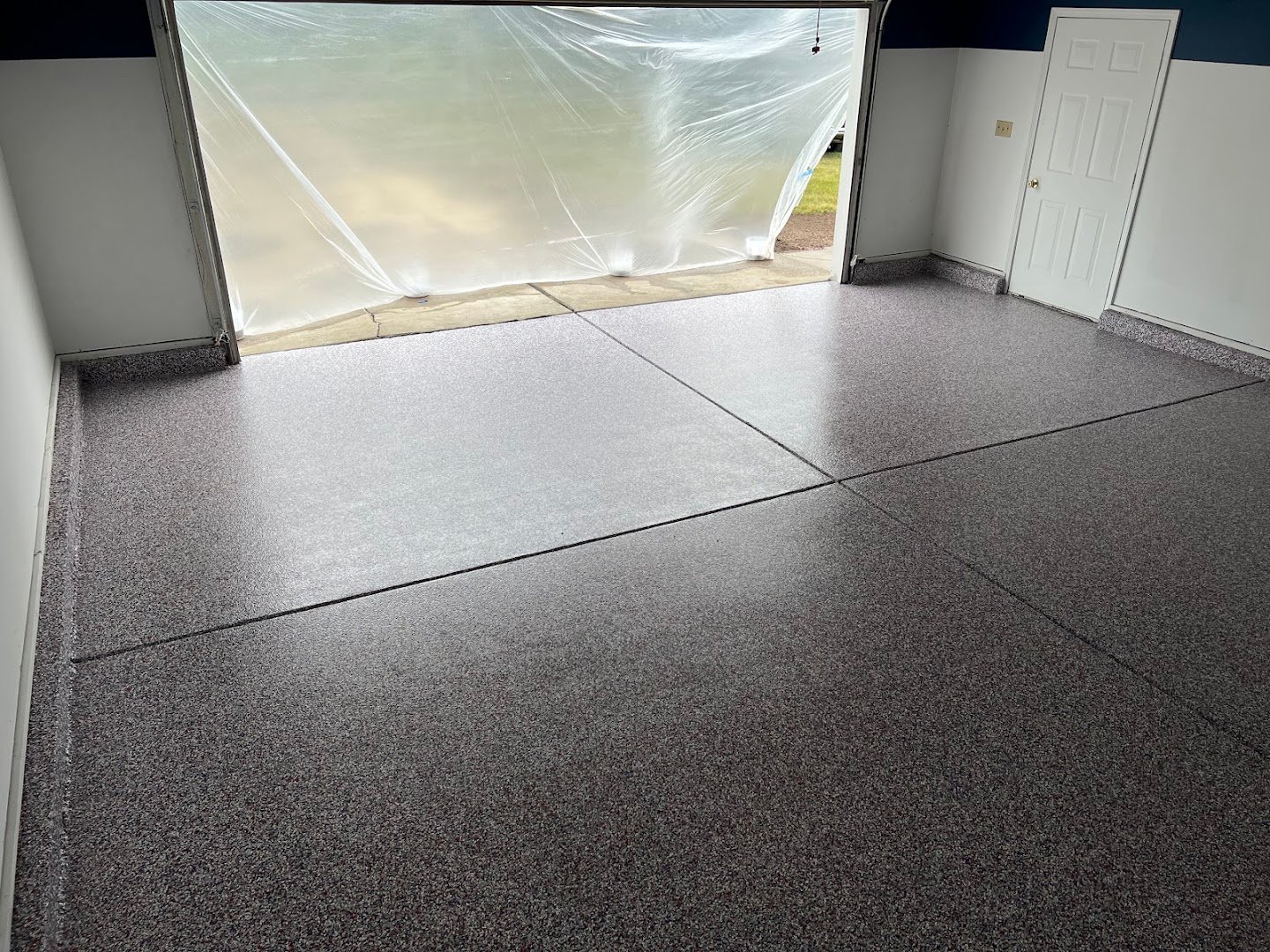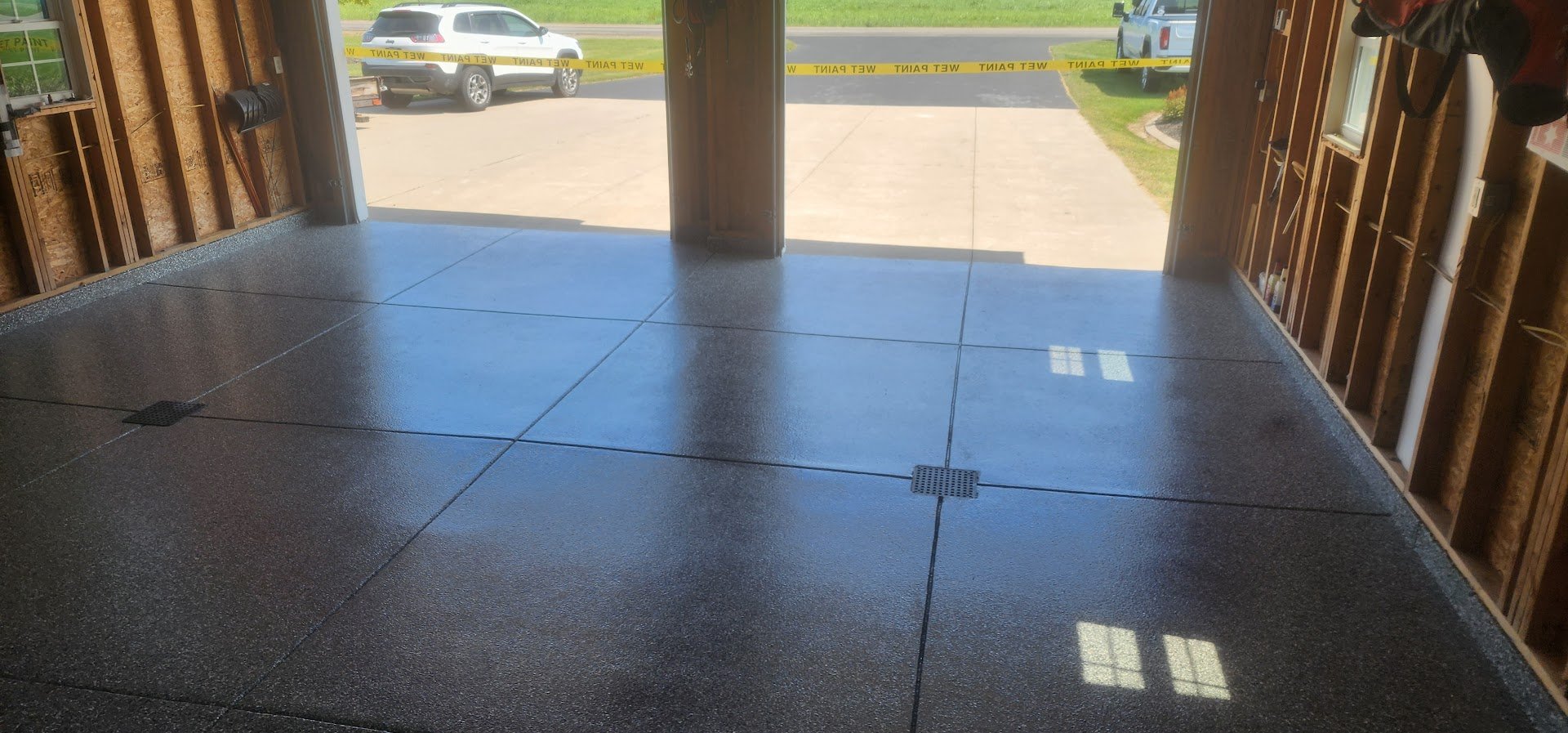
Driveway coatings note: No warranty is offered on driveway flake systems. This exclusion applies in every state. All other surfaces (garages, patios, pool decks, walkways, etc.) remain covered under our standard warranty terms.
Quick Answer: New York's freeze-thaw cycles, road salt, and heavy snowfall are harsh on unprotected driveways. Concrete coatings for driveways create a sealed, flexible barrier that prevents water infiltration, resists chemical damage, and dramatically reduces the risk of cracking and spalling—extending the life of your driveway by years.
Key Takeaways
- Freeze-thaw cycles are the leading cause of cracking and spalling in New York driveways, and unprotected concrete absorbs the water that drives this damage.
- Concrete coatings for driveways seal out moisture, resist road salt, and add a flexible layer that moves with temperature changes instead of cracking under them.
- Working with a professional driveway coating contractor in Syracuse, NY ensures proper surface prep and product selection—two factors that determine how long your coating lasts.
---
Upstate New York doesn't go easy on driveways. By the time March rolls around, the average Syracuse driveway has weathered months of sub-zero temperatures, repeated freeze-thaw cycles, and a relentless assault from road salt and de-icing chemicals. For bare concrete, that's a recipe for disaster.
Cracking and spalling—the flaking and pitting of the concrete surface—aren't just cosmetic problems. Left untreated, they allow water to penetrate deeper into the slab, accelerating structural deterioration with every passing winter. Repairs are costly. Replacement is even more so.
The good news? A quality concrete coating applied by a professional can stop most of this damage before it starts. Here's how it works, and why it matters for homeowners in Central New York.
Why New York Weather Is So Destructive to Concrete
Concrete is porous by nature. That's rarely a problem in mild climates, but in Syracuse, it's a serious liability.
When temperatures drop, water that has seeped into the concrete freezes and expands—by as much as 9% in volume. That expansion exerts pressure on the surrounding material, creating micro-cracks. When temperatures rise again, the ice melts and the cycle repeats. Over a single winter, a Syracuse driveway can go through dozens of these freeze-thaw cycles, each one widening existing cracks and creating new ones.
Road salt compounds the problem. While salt lowers the freezing point of water—keeping your driveway safer to walk on—it also draws moisture deeper into the concrete and accelerates a chemical process called carbonation, which weakens the surface layer. The result is spalling: chunks of concrete begin to flake away, leaving the surface rough, pitted, and vulnerable to further damage.
Heavy snowfall, repeated plowing, and the weight of vehicles all add mechanical stress on top of the chemical and thermal stress. Unprotected concrete simply wasn't built to handle all of this year after year.
How Concrete Coatings for Driveways Prevent This Damage
A professionally applied concrete coating doesn't just make your driveway look better—it fundamentally changes how the surface interacts with the environment.
Sealing Out Moisture
The most important function of any concrete coating for driveways is moisture control. A high-quality polyurea or epoxy coating forms a dense, non-porous barrier across the entire surface, preventing water from infiltrating the slab. No water infiltration means no ice expansion inside the concrete—and no expansion means no cracking from freeze-thaw cycles.
Apollo Concrete Coatings uses professional-grade polyurea coatings that cure quickly and bond tightly to the concrete substrate, leaving virtually no pathways for moisture to enter.
Resisting Road Salt and Chemical Damage
Unlike bare concrete, a coated surface is highly resistant to chloride penetration—the mechanism by which road salt causes damage. Quality coatings used by driveway coating contractors in Syracuse, NY are also resistant to petroleum products, de-icing chemicals, and other substances that routinely contact driveways.
This chemical resistance is particularly valuable in Central New York, where heavy salting is standard practice from November through March.
Adding Flexibility to a Rigid Material
One of the underappreciated benefits of modern polyurea coatings is their flexibility. Concrete cracks partly because it's rigid—when thermal expansion and contraction occur, the material has nowhere to go. A flexible coating layer absorbs some of that movement, reducing the stress transferred to the concrete beneath.
This doesn't make your driveway indestructible, but it meaningfully reduces the mechanical forces that lead to cracking over time.
Protecting Against UV and Surface Wear
Summer brings its own challenges. UV radiation degrades unprotected concrete, and years of tire friction slowly abrades the surface. A UV-stable topcoat protects against both, keeping the surface intact and easier to maintain through every season.
Does Coating Work on Already-Damaged Concrete?
This is one of the most common questions Apollo Concrete Coatings hears from homeowners. The short answer: it depends on the extent of the damage.
Minor surface cracks and early-stage spalling can often be repaired before a coating is applied, and the coating itself helps prevent those issues from worsening. However, concrete with deep structural cracking, significant settlement, or widespread deterioration may need to be repaired or replaced before coating is a viable option.
This is why surface preparation matters so much. A reputable driveway coating contractor in Syracuse, NY will assess the current condition of your concrete before recommending a solution—not simply apply a coating over existing problems and hope for the best.
What to Look for in a Driveway Coating Contractor in Syracuse, NY
Not all coatings—and not all contractors—are equal. A few key factors separate a lasting result from one that peels and fails after a single winter:
- Surface preparation: Proper mechanical grinding or shot blasting opens the concrete surface so the coating bonds effectively. Skipping this step is the most common reason coatings fail prematurely.
- Product quality: Professional-grade polyurea coatings outperform consumer-grade epoxy kits in durability, flexibility, and resistance to temperature extremes.
- Experience with local conditions: A contractor who works in Central New York understands how Syracuse winters affect concrete and can tailor their approach accordingly.
- Warranty: Reputable contractors stand behind their work. Ask about the warranty before signing anything.
Apollo Concrete Coatings specializes in concrete coatings for driveways across the Syracuse area, with a process built specifically to handle Upstate New York's demanding climate.
Protect Your Driveway Before Winter Does More Damage
Cracking and spalling are progressive problems. A small crack this spring becomes a larger one next fall, and by the following winter, you may be looking at a repair bill that dwarfs the cost of prevention.
A professionally applied concrete coating is one of the most cost-effective investments a Syracuse homeowner can make in their property. It stops the moisture, resists the salt, and gives your driveway the protection it needs to survive—and look great through—years of Central New York winters.
Ready to protect your driveway? Contact Apollo Concrete Coatings today for a free assessment from a trusted driveway coating contractor in Syracuse, NY.
---
Frequently Asked Questions
How long do concrete driveway coatings last in New York's climate?
A professionally applied polyurea coating typically lasts 10–15 years with proper maintenance. Longevity depends on surface preparation quality, product grade, and how well the coating handles local freeze-thaw conditions.
Can I apply a driveway coating myself, or do I need a contractor?
DIY kits are available, but they rarely match the durability of professional-grade coatings. Proper surface preparation requires commercial equipment, and application errors—especially in temperature-sensitive conditions—can cause premature peeling. For driveways in Syracuse, NY, a professional application is strongly recommended.
When is the best time of year to coat a driveway in Syracuse, NY?
Late spring through early fall is ideal. Concrete coatings require moderate temperatures—typically between 50°F and 90°F—to cure correctly. Applying a coating in cold or wet conditions risks adhesion failure.
Does a coating fix existing cracks in my driveway?
Minor cracks can be filled and repaired before coating is applied, and the coating helps prevent them from worsening. Deep or structural cracks require more extensive repair first. A professional assessment will determine what your driveway needs.
Will a coated driveway be slippery in winter?
Not if the right product is used. Professional coatings can include anti-slip additives—such as texture flakes or grit—that improve traction, even when the surface is wet or icy.