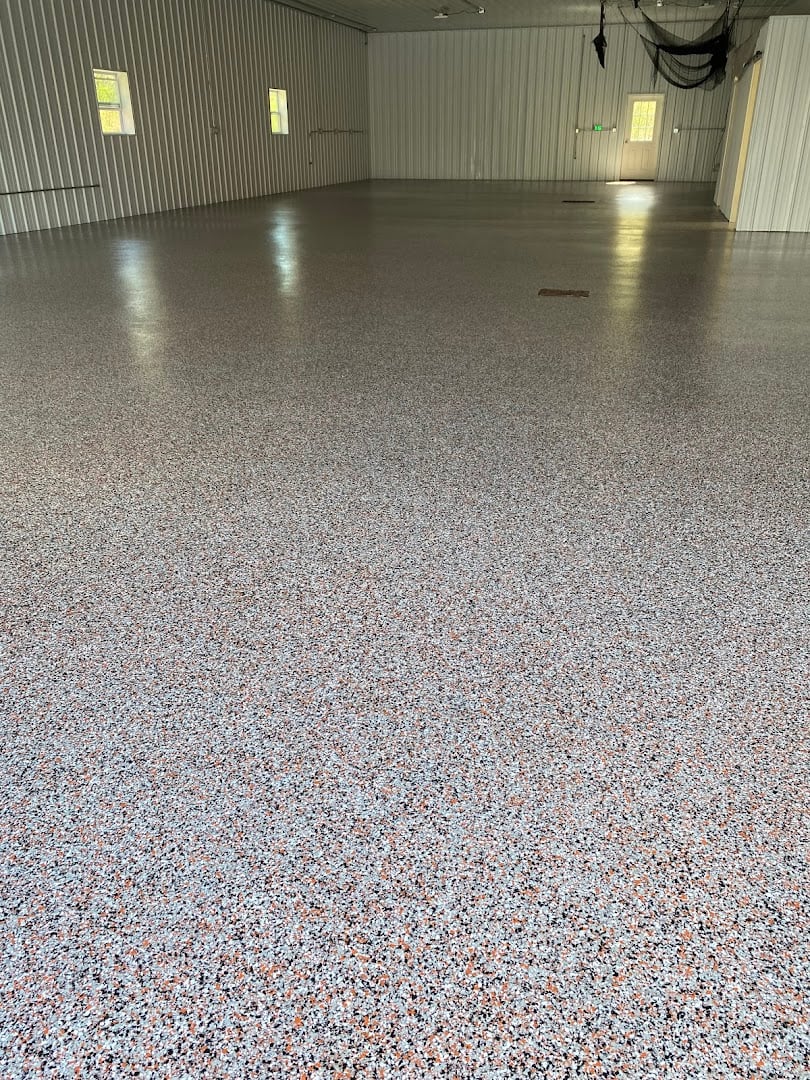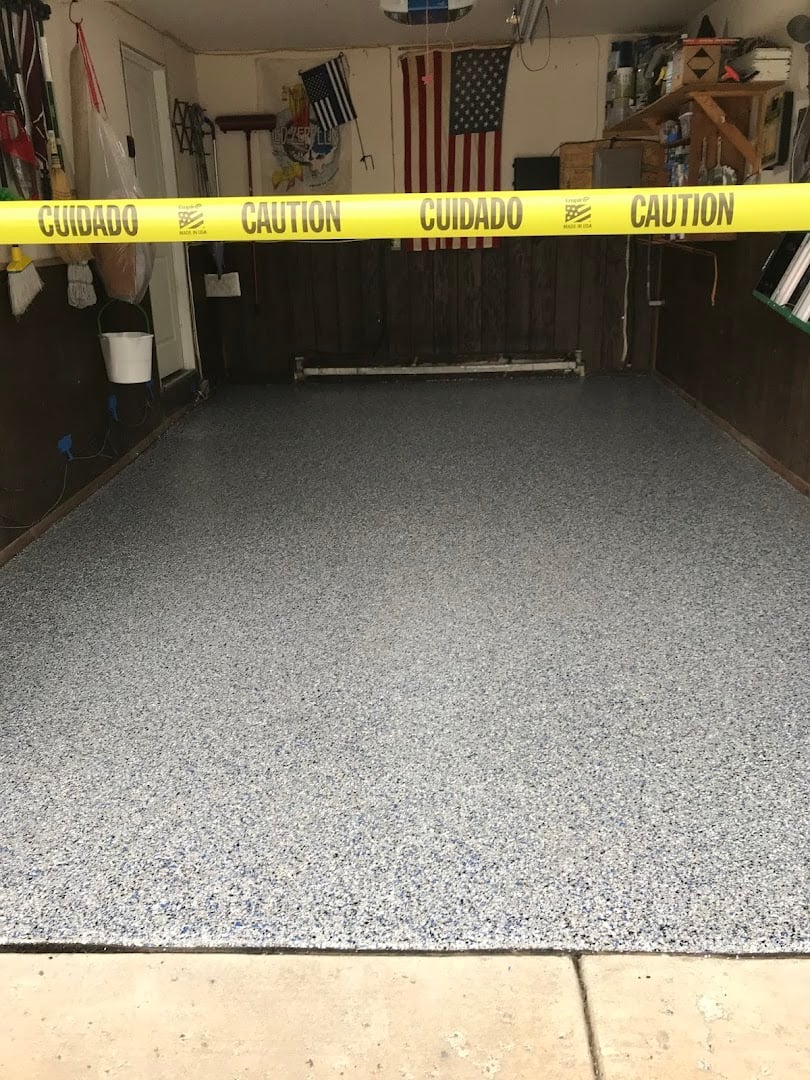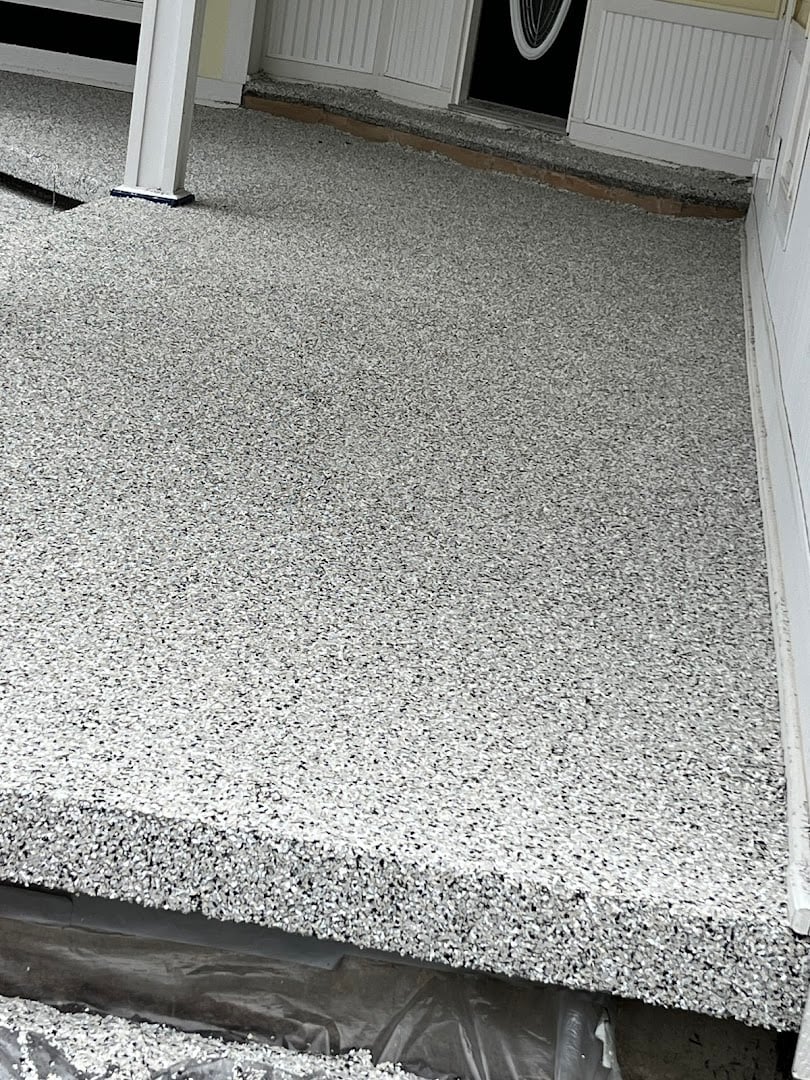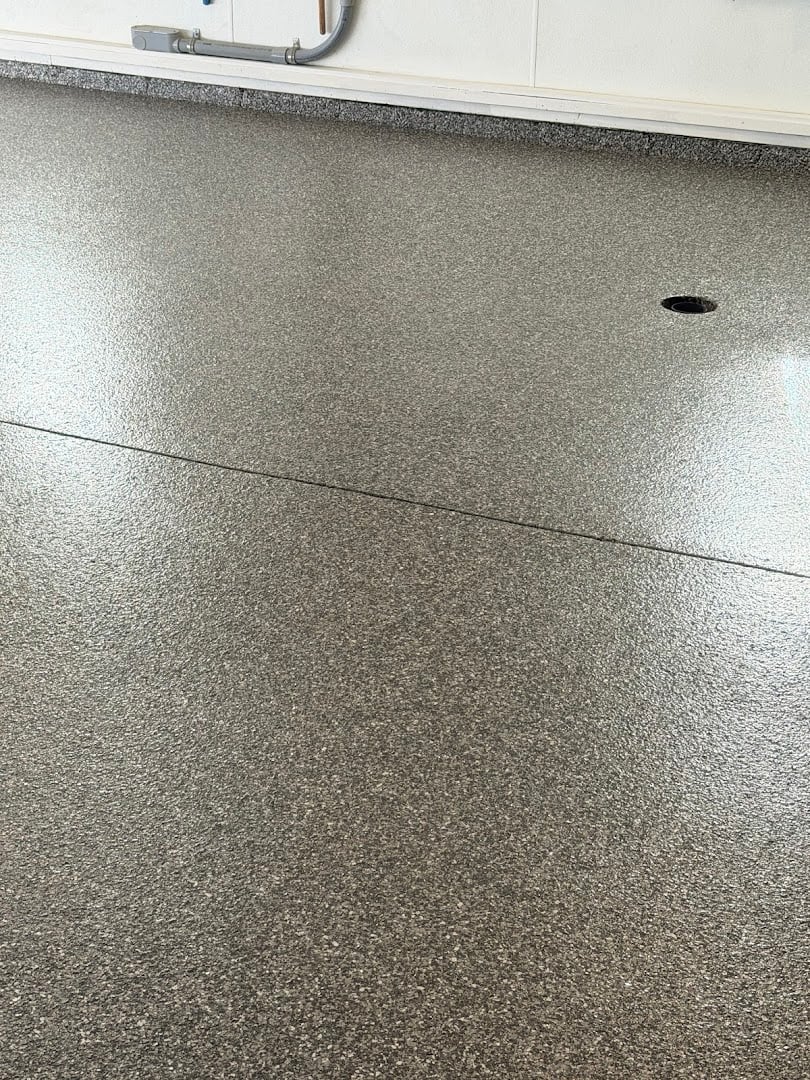
Quick answer: Garage floor coatings resist oil, grease, and automotive chemicals by creating a hard, non-porous barrier over your concrete. Materials like epoxy and polyaspartic seal the surface so spills sit on top instead of soaking in—making cleanup fast and protecting the slab underneath from stains and damage.
If you've ever parked a leaky car on bare concrete, you know the aftermath. Dark oil stains spread across the floor, grease works its way into the surface, and no amount of scrubbing seems to bring it back. Bare concrete is porous, which means it soaks up almost everything you spill on it.
That's exactly the problem garage floor coatings are built to solve. A quality coating turns a thirsty, stain-prone slab into a sealed, wipe-clean surface that shrugs off the messiest automotive fluids. At Apollo Concrete Coatings, we help homeowners protect their garages so they can stop worrying about spills and start enjoying a cleaner space.
Below, we'll break down how these coatings actually work, why they stand up to harsh chemicals, and what to consider before coating your own floor.
Key Takeaways
- Garage floor coatings create a non-porous barrier that stops oil, grease, and automotive chemicals from soaking into your concrete.
- Epoxy and polyaspartic coatings are chemically resistant, so spills wipe up easily instead of leaving permanent stains.
- Homeowners searching for garage floor coatings Bradford PA can trust Apollo Concrete Coatings for a durable, low-maintenance finish.
Why does bare concrete stain so easily?
Concrete looks solid, but it's full of tiny pores. Under a microscope, the surface is a network of small channels and gaps. When oil, gasoline, or brake fluid hits bare concrete, it seeps into those pores instead of staying on top.
Once a liquid soaks in, it's nearly impossible to remove. The stain isn't sitting on the surface—it's inside the material. This is why old garage floors often look permanently darkened, especially where vehicles park.
Harsh automotive chemicals make things worse. Acids and solvents can slowly eat away at unprotected concrete, leaving it pitted, dusty, and weak over time.
How do garage floor coatings block oil and grease?
A coating works by sealing the surface completely. Instead of an open, porous slab, you get a smooth, continuous layer with no gaps for liquids to enter.
Here's what that barrier does:
- Stops absorption. Oil and grease rest on top of the coating instead of soaking in.
- Speeds up cleanup. A quick wipe or mop removes most spills—no scrubbing required.
- Prevents staining. Because nothing penetrates the surface, your floor stays looking new.
Think of it like the difference between spilling coffee on a paper towel versus a glass countertop. The paper towel absorbs everything; the glass lets you wipe it away. A coated floor behaves like the glass.
What makes epoxy and polyaspartic coatings chemically resistant?
Not all coatings are equal. The two most popular options for garages—epoxy and polyaspartic—are prized for their chemical resistance.
Epoxy coatings
Epoxy is a two-part system that cures into a hard, dense film. Once fully cured, it forms a tough shell that resists oil, gasoline, antifreeze, and many household chemicals. Its strong bond with the concrete keeps the barrier intact even under heavy vehicle traffic.
Polyaspartic coatings
Polyaspartic coatings take resistance a step further. They cure quickly, hold up against UV light, and offer excellent protection against automotive fluids and road salts. Many installers use polyaspartic as a topcoat over epoxy for the best of both worlds—strength underneath, durability on top.
Both systems share one key trait: they're non-reactive. When brake fluid or gasoline lands on them, the chemicals sit harmlessly on the surface rather than breaking down the coating.
Which automotive chemicals can a coated floor handle?
A properly installed coating stands up to the everyday fluids found in any garage:
- Motor oil – wipes up without leaving a shadow.
- Gasoline and diesel – won't stain or degrade a cured coating quickly.
- Antifreeze and coolant – rest on the surface for easy removal.
- Brake and transmission fluid – resisted by both epoxy and polyaspartic finishes.
- Road salt and de-icing chemicals – blocked from reaching and corroding the concrete.
While no floor is completely spill-proof forever, cleaning up quickly keeps a coated surface performing at its best for years.
Do garage floor coatings need much maintenance?
One of the biggest advantages is how little upkeep they require. Because the surface is sealed and smooth, dirt and fluids don't cling to it.
For most homeowners, maintenance means:
- Wiping fresh spills as soon as you notice them.
- Sweeping or dust-mopping regularly.
- Occasional mopping with a mild cleaner.
That's a far cry from scrubbing stubborn stains out of bare concrete—or living with them forever.
Are garage floor coatings worth it for homeowners in Bradford, PA?
For anyone dealing with tough winters and salty roads, the answer is usually yes. Garage floor coatings Bradford PA homeowners rely on don't just look good—they protect the slab from moisture, salt, and chemical damage that come with the seasons.
Choose a coated floor if:
- You park vehicles that occasionally leak oil or fluids.
- You want a garage that's easy to clean and looks polished.
- You want to protect your concrete investment for the long term.
A professional installation makes the biggest difference. Proper surface prep, quality materials, and expert application ensure the coating bonds tightly and lasts for years.
Protect your garage floor for good
Oil, grease, and automotive chemicals don't stand a chance against a properly coated garage floor. By sealing the porous concrete with a chemically resistant barrier, you get a surface that cleans up in seconds and stays looking sharp season after season.
If you're ready to stop fighting stains, Apollo Concrete Coatings can help. Our team installs durable, chemical-resistant floors built for real garages and real vehicles. Reach out today to learn which coating is right for your space.
Frequently asked questions
How long do garage floor coatings last?
With professional installation and proper care, quality coatings like epoxy and polyaspartic can last many years, even under regular vehicle use. Prompt spill cleanup and routine sweeping help extend their lifespan.
Will oil permanently stain a coated garage floor?
No. On a properly cured coating, oil sits on the surface instead of soaking in. As long as you wipe it up in a reasonable time frame, it won't leave a permanent stain the way it would on bare concrete.
Can I coat my garage floor myself?
DIY kits exist, but professional installation delivers far better results. Proper surface preparation is the most important step for a coating that bonds well and resists chemicals—something that's easy to get wrong without the right tools and experience.
Are polyaspartic coatings better than epoxy?
Each has strengths. Epoxy provides a strong, hard base, while polyaspartic offers faster curing, UV stability, and excellent chemical resistance. Many installers combine the two for maximum durability.