
Quick answer: Road salt and winter weather cause garage floor damage in Erie, PA through freeze-thaw cycles, salt corrosion, and moisture penetration that crack and pit concrete. Garage floor coatings create a protective barrier that blocks salt and water from soaking into concrete, preventing costly structural damage. Apollo Concrete Coatings specializes in durable, weather-resistant coatings designed for Erie's harsh winters.
Key Takeaways
- Road salt and freeze-thaw cycles are the leading causes of garage floor cracking, pitting, and surface deterioration in Erie, PA.
- Untreated concrete absorbs moisture and salt, which weakens the slab from the inside out over successive winters.
- Garage floor coatings Erie PA homeowners trust, like those from Apollo Concrete Coatings, seal concrete against these threats and extend the life of the floor.
Erie, PA winters are no joke. Between lake-effect snow, sub-freezing temperatures, and months of road salt tracked in on car tires, your garage floor takes a beating every single year. Most homeowners don't think twice about the concrete under their vehicle until they notice flaking, white staining, or crumbling edges near the garage door. By then, the damage has usually been building for seasons.
Understanding why this happens — and what you can do about it — can save you thousands of dollars in concrete repair or replacement. This post breaks down exactly how road salt and winter weather attack your garage floor, and why garage floor coatings have become the go-to solution for homeowners across Erie County.
Why Is Road Salt So Damaging to Concrete Garage Floors?
Road salt, typically sodium chloride or calcium chloride, is effective at melting ice because it lowers the freezing point of water. That's great for your driveway, but it's rough on concrete. When salt-laden slush drips off your car and pools on the garage floor, the salt doesn't just sit on the surface. It seeps into the tiny pores of untreated concrete.
As that saltwater penetrates deeper into the slab, it creates chemical reactions that break down the concrete's internal structure. Calcium chloride, in particular, can react with the calcium hydroxide in concrete to form compounds that expand and crack the material from within. Over a single Erie winter, this process might cause barely noticeable surface dulling. Over five or ten winters, it can lead to visible pitting, flaking, and structural weakness.
What Does Salt Damage Actually Look Like?
Salt damage to garage floors typically shows up in a few recognizable patterns:
- Surface scaling: Thin layers of concrete flake off, exposing the aggregate underneath.
- White staining (efflorescence): Mineral deposits rise to the surface as water evaporates, leaving a chalky white residue.
- Pitting: Small craters form where salt crystals have repeatedly expanded and contracted within the concrete pores.
- Cracking near entry points: The area closest to the garage door often shows the earliest and most severe damage, since that's where salt and slush concentrate.
How Do Freeze-Thaw Cycles Make Winter Damage Worse?
Erie, PA sits in a freeze-thaw climate zone, which means temperatures regularly swing above and below freezing throughout the winter months. This matters a lot for concrete. Here's why: when water seeps into concrete and then freezes, it expands by roughly 9%. That expansion puts pressure on the surrounding material. When temperatures rise again and the ice melts, the concrete contracts back.
Repeat that cycle dozens of times each winter, and you get a slow but steady widening of existing cracks, along with the formation of new ones. Combine freeze-thaw cycling with the corrosive effects of road salt, and you've got a one-two punch that's uniquely hard on garage floors in this region compared to areas with milder winters.
Why Does This Matter More for Garages Than Driveways?
Driveways are exposed to open air and sunlight, which helps them dry out between storms. Garages, on the other hand, trap moisture. Cars dripping with slush sit for hours, sometimes overnight, allowing saltwater to pool and slowly absorb into the slab without much chance to evaporate. This makes garage floors especially vulnerable to the compounding effects of salt exposure and freeze-thaw stress.
Can Garage Floor Coatings Actually Prevent This Damage?
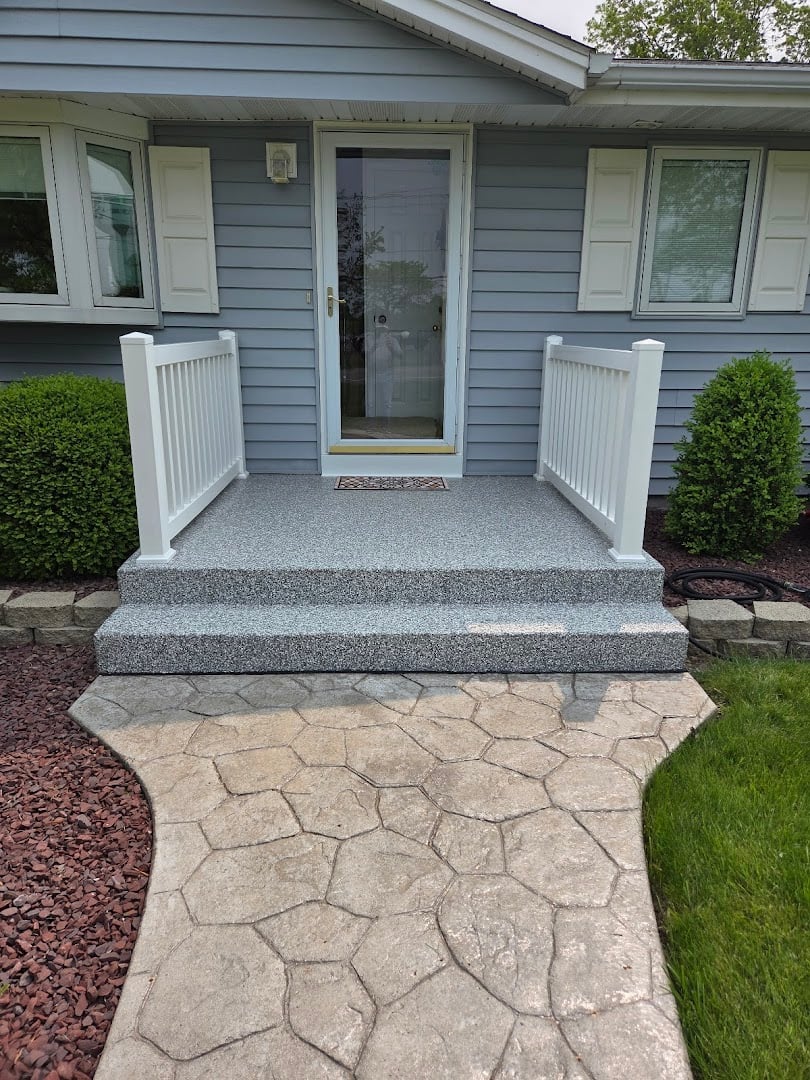
Yes. Garage floor coatings work by sealing the surface of the concrete so that water, salt, and chemicals can't penetrate it in the first place. Instead of soaking into porous concrete, moisture beads up and rolls off or evaporates before it can cause harm.
Choose a high-quality epoxy or polyaspartic coating if long-term protection against Erie's extreme winters matters more to you than upfront cost, since these systems are built to withstand repeated freeze-thaw cycling and chemical exposure far better than paint or sealers alone. Apollo Concrete Coatings uses industrial-grade polyaspartic coatings that cure faster than traditional epoxy and hold up better against the temperature swings common in northwestern Pennsylvania.
What Makes a Good Garage Floor Coating for Erie's Climate?
Not all coatings perform equally well in a climate like Erie's. Look for these qualities:
- Chemical resistance: The coating should resist degradation from road salt, antifreeze, and motor oil.
- Flexibility: Coatings with some flexibility can handle the slight expansion and contraction of the slab without cracking themselves.
- UV stability: While less critical indoors, UV-stable coatings resist yellowing if your garage gets natural light.
- Proper surface preparation: Even the best coating will fail prematurely if it's applied over a poorly prepped slab. Professional installation typically includes diamond grinding to open the concrete pores for better adhesion.
How Long Does a Garage Floor Coating Last in Erie, PA?
A properly installed polyaspartic or epoxy coating from a professional installer typically lasts 10 to 20 years with normal residential use. Coatings applied by professionals tend to outperform DIY kits because professional-grade materials bond more effectively to prepared concrete, and application techniques matter for long-term durability in freeze-thaw climates like Erie's.
Protect Your Garage Floor Before Next Winter Hits
Road salt and freeze-thaw cycles don't take a break, and neither should your concrete protection strategy. The damage happens gradually, which makes it easy to ignore until repair costs start climbing. Addressing it now, before the next round of snow and salt arrives, is far more cost-effective than replacing a cracked or crumbling slab later.
If you're looking for garage floor coatings Erie PA homeowners rely on for lasting protection, Apollo Concrete Coatings offers free consultations to assess your garage's current condition and recommend the right coating system for your needs. A proactive approach now can mean avoiding thousands in repair costs down the road.
Frequently Asked Questions
How much does a garage floor coating cost in Erie, PA?
Pricing varies based on garage size, existing floor condition, and coating type, but most residential garage floor coating projects range from a few hundred to a few thousand dollars. Apollo Concrete Coatings provides free, no-obligation quotes based on an in-person assessment.
How long does it take to install a garage floor coating?
Most residential garage floor coatings can be installed in one to two days, including surface preparation, application, and curing time. Polyaspartic coatings often cure faster than traditional epoxy, allowing some garages to be back in use within 24 hours.
Will a garage floor coating stop existing cracks from spreading?
A coating alone won't repair structural cracks, but professional installers typically fill and patch existing cracks before applying the coating, which helps stabilize the surface and prevent further spreading.
Is DIY garage floor coating a good alternative to professional installation?
DIY kits can offer short-term improvement, but they generally lack the surface preparation and industrial-grade materials used by professionals, which means they tend to peel or wear out faster, especially in freeze-thaw climates like Erie's.
Who should consider a garage floor coating?
Homeowners who park vehicles in their garage during winter, store equipment on the floor, or have noticed early signs of salt damage, such as staining or surface flaking, are good candidates for a protective coating before damage worsens.